Small Bites, Big Business: Why Festival Vendors Are Betting on the $5 Plate
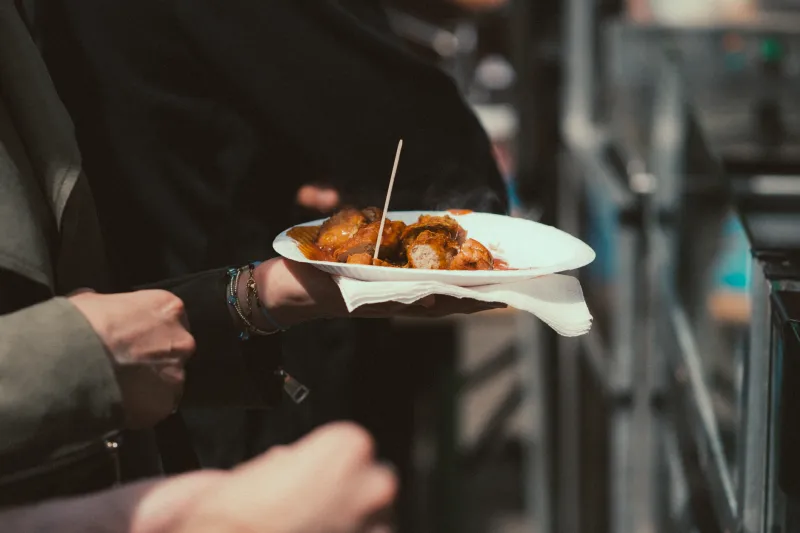
Walk any mid-sized food festival in the U.S. this fall and something feels different. The line for the $16 brisket platter is six people deep. The line for the $5 cup of brisket mac is thirty. Somewhere between the fryer and the POS tablet, American festival food quietly got smaller — and a lot of vendors think that's the smartest thing to happen to the business in years.
The Five-Dollar Bite Isn't a Discount. It's a Strategy.
On paper, a mini portion looks like a margin sacrifice. In practice, vendors describe it as a volume play with three wins stacked on top of each other: more transactions per attendee, less food waste per service hour, and shorter lines that don't scare people off.
"A plate customer is one decision," says a taco stand operator who works the Texas and Oklahoma circuit, describing why she moved her festival menu to two-bite portions in 2024. "A bite customer is four decisions, and they make them all in the same twenty feet." Her stall still sells the full plate. It's just no longer the thing printed on the front of the menu.
The other half of the equation is speed. A short menu of small items moves faster through a small line kitchen. Faster throughput means the same square footage of booth does more covers per hour, which is the metric that actually decides whether a festival weekend is worth the truck rental.
What the Sample Pricing Looks Like
We looked at menu boards and vendor pricing sheets from a spread of U.S. festivals across 2025 and into this year. The pattern is consistent: small items cluster tightly in the $4–$8 band, while full plates drift upward and sell less per head.
| Item type | Typical price band | Notes |
|---|---|---|
| Two-bite sampler | $4–$6 | Highest units per hour at most booths |
| Snack-size portion | $6–$9 | Where most vendors put their signature item |
| Full plate | $13–$19 | Lower volume, higher ticket, better for seated events |
| Tasting flight | $10–$14 | Bundles 3–4 small items, strong margin |
| Drink pairing add-on | $3–$6 | Frequently outsells dessert |
One organizer in the Midwest told us their average attendee transaction dropped from about $14 to just under $9 after a small-bite-heavy vendor lineup — but the number of transactions per attendee jumped from roughly 1.4 to 2.6. Total per-head spend went up. That's the whole trick in one sentence.
The Attendee Side: Same Wallet, More Variety
For festival-goers, the shift reads as more choice for the same budget. Someone arriving with $40 used to face a decision between two plates and a drink. Now that same $40 buys five or six tastes, which is closer to what people say they come for: variety, not volume.
It also changes how groups eat. Small bites are shareable by default, which turns a two-person outing into a tasting crawl and makes the "I want to try that but not commit" problem disappear. Vendors who lean into it — clear signage, numbered items, a punch-card — report more repeat visits to the same booth, which is the cheapest sale in the building.
Where the Model Breaks Down
It isn't universal, and vendors are quick to say so. Three failure modes come up repeatedly:
- Too small to satisfy. Under about three bites, attendees feel managed and stop buying. Portion credibility matters more than price.
- No anchor item. A menu of only $5 bites leaves money on the table. Most successful booths keep one premium item in the $12–$16 range for the people who came hungry.
- Wrong event type. Seated, ticketed dinners and chef-driven tasting events still reward the full plate. Small bites shine in high-foot-traffic, walk-around settings.
There's also a labor catch. Small portions mean more plating motions per dollar, so booths need a station design that keeps assembly to a couple of movements. Vendors who tried mini portions without reworking their line described the first weekend as "a disaster with better math."
What Planners Should Put in the 2026 Vendor Packet
If you're organizing for next season, the mini-portion trend is less about mandating a price cap and more about structuring incentives so vendors arrive at it themselves.
- Ask for a menu tier structure, not a menu. Request at least one item under $7, one signature item, and one premium plate. Vendors who plan the ladder ahead of time rarely default to a flat menu.
- Track transactions, not just gate. Spend per attendee is the number that tells you whether your vendor mix is working. Small-bite-heavy lineups often show flat tickets and rising totals.
- Publish your waste rules early. Compost and donation logistics change the math on small batches more than most vendors expect.
- Build for the sampler. More trash points, more standing-height tables, and shorter booth frontage all support the walk-and-eat pattern.
- Protect the tasting flight. Bundled 3–4 item flights are the single most reliable margin item small vendors have right now.
Is It Here to Stay?
Probably, with a caveat. The mini-portion model spread because it solves real problems — throughput, waste, and decision fatigue — not because of a marketing trend. As long as festival attendance stays high and attendees keep saying they'd rather try six things than eat one, vendors have every reason to keep cutting the plate in half.
The caveat is that "small" is a moving target. Prices creep, portions creep back, and the $5 bite becomes the $7 bite. Vendors who treat small portions as a pricing gimmick will lose the trust that makes the model work. The ones who treat it as a menu architecture — small items, a clear ladder, one indulgent anchor — are the ones building repeat customers instead of one-weekend transactions. For planners, that's the distinction worth writing into the vendor packet this winter.