Beyond the Gates: Seven U.S. Cities Where the Food Festival Spills Into the Streets
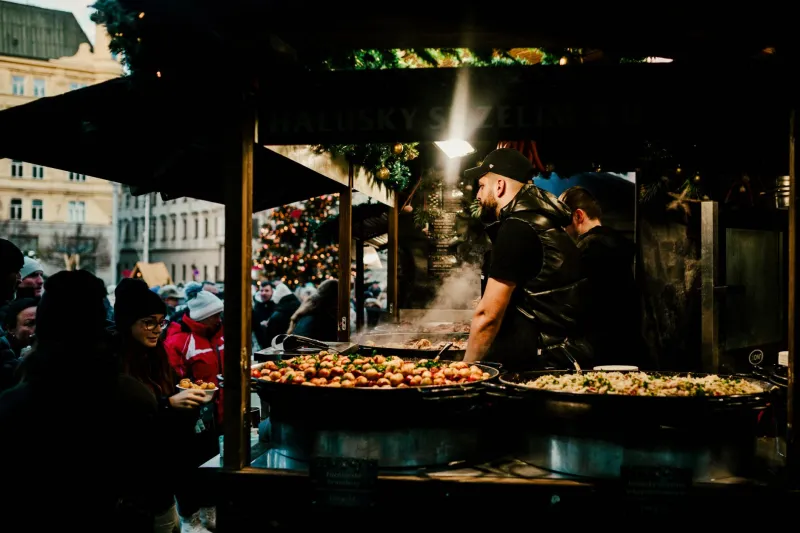
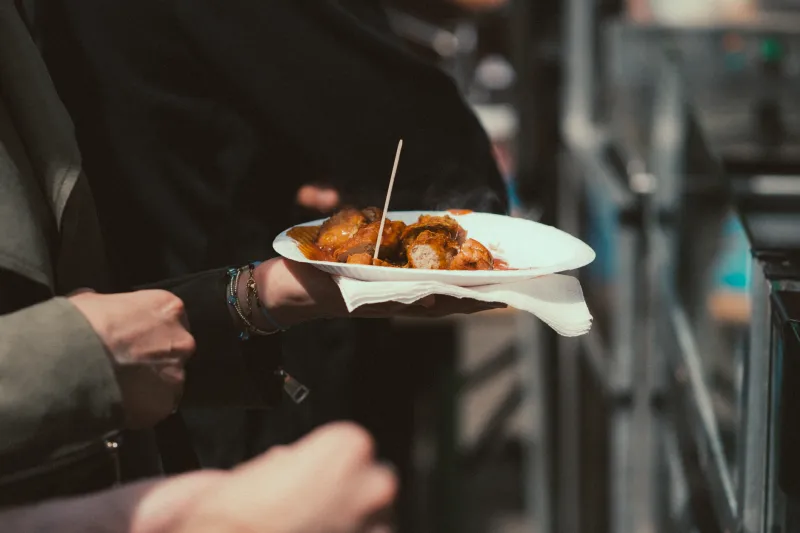
Here's a thing that happens to everybody: you spend four hours at a food festival, you eat three tastes, you get sunburnt, you leave at 4 p.m. — and then you realize the park you just exited is eight blocks from a neighborhood that eats better than the festival did.
The smart move is to plan for that. Below are seven U.S. cities where the festival grounds and the everyday street-food district overlap enough to build a full day out of it. No gate ticket required for half the fun.
1. Portland, Oregon — Festivals Downtown, Carts Everywhere After
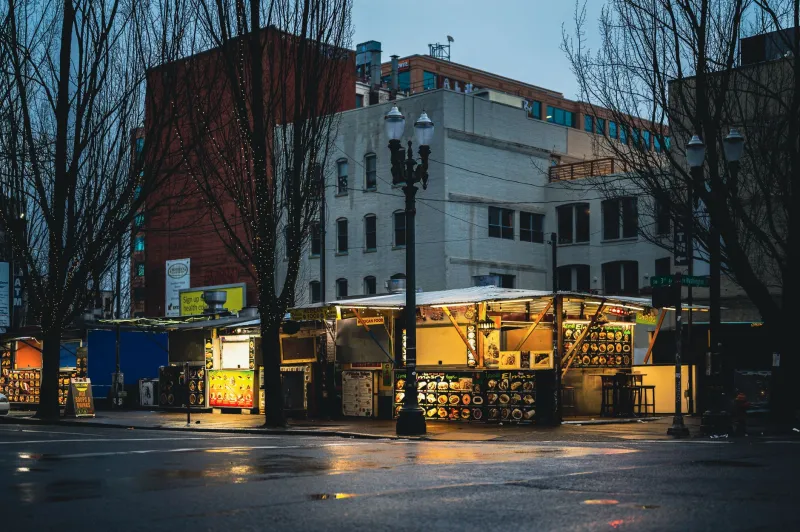
Portland's festival calendar clusters around the waterfront and the downtown core, which is lucky, because the city's food cart pods are a short walk or a quick MAX ride from most of it. The route: hit the festival in the morning while lines are short, then walk north and east into the pods for an afternoon crawl.
Where to go: Pine Street Market downtown as a rain-proof starter, then the eastside cart clusters along Division and Alberta for the main event.
What to order: Whatever's got a line of locals at 2 p.m. That's not a cop-out — it's the most reliable signal in a city with this many carts.
Timing tip: Carts keep going long after festival closing time, and the 3–5 p.m. window is the sweet spot before dinner rush.
2. Austin, Texas — Rainey Street to South Congress on Foot
Festival season in Austin means the parks and the river, and everything worth eating is a bridge crossing away. Build the day around a festival morning and a South Congress evening, or flip it: breakfast tacos, festival afternoon, Rainey Street at dusk.
Where to go: South Congress for walk-up snack windows, East Sixth for the late-night slice-and-taco circuit, Rainey Street if the bungalow-bar scene is your thing.
What to order: A breakfast taco before the gates open. It's cheap, it's fast, and it changes the whole day's math.
Timing tip: Austin's heat is real. Plan the walkable stretch for after 5 p.m. and keep the festival for the earlier hours.
3. Philadelphia, Pennsylvania — Festival at the River, Market in the Middle
Philly does outdoor festivals well, and the city's core food geography is famously walkable. Reading Terminal Market is the anchor — an indoor food hall that works in any weather — with the Italian Market a short ride south for the more chaotic, stand-on-the-sidewalk version.
Where to go: Reading Terminal for round one, then walk or take the Broad Street line down to the Italian Market for cheese, pastries, and produce stands that stay open into the afternoon.
What to order: A roast pork sandwich is a full meal. Split it. You still have places to be.
Timing tip: Reading Terminal is a madhouse at lunch. Go at 10 a.m. or after 2:30 p.m. and you'll actually enjoy it.
4. Chicago, Illinois — Festival in the Park, Dinner on Randolph
The West Loop's Randolph Street strip is a restaurant row that happens to sit within walking distance of the park-and-street- closures festival circuit. That's your built-in evening plan: festival by day, patio dinner or a taco crawl once the booths break down.
Where to go: Randolph Street for the sit-down option, Pilsen for the taquería version, Logan Square if you want to keep moving.
What to order: In Pilsen, get whatever's on the comal. In Logan Square, a late-night slice.
Timing tip: Neighborhood spots fill up fast when a big festival lets out. Book ahead or eat at 5 p.m., not 8 p.m.
5. New Orleans, Louisiana — French Quarter Fringe to Frenchmen
New Orleans is the city where the festival is almost the appetizer. Everything is walkable if you're honest with yourself about how much you're going to sweat, and the street food is genuinely everywhere, all day, all year.
Where to go: Start at the French Market, cut through the Quarter for something fried, and finish on Frenchmen Street where the music spills onto the sidewalk.
What to order: Something in a paper bag. Anything. It's New Orleans.
Timing tip: Go early for the market, late for Frenchmen. The middle of the day belongs to air conditioning.
6. Queens, New York — The Best Food Borough, No Gate Needed
If you're planning a festival trip to New York, consider making Queens the main event instead of an add-on. Flushing and Jackson Heights are two of the densest, most rewarding food corridors in the country, and the walkability — especially around the 7 train — is excellent.
Where to go: Flushing for noodles and dumplings, Jackson Heights for South Asian and Latin American street food, both a short subway hop apart.
What to order: Dumplings by the dozen in Flushing. It's the best value in the five boroughs.
Timing tip: Go on a weekday if you can. The weekend crowds in Flushing are real, and half the fun is browsing without a shoulder-to-shoulder squeeze.
7. San Antonio, Texas — Pearl District to Southtown
San Antonio has quietly built one of the best walk-and-eat routes in the South: the Pearl complex up north, the River Walk spine in the middle, and Southtown's bakeries and taquerías below. Festival days here tend to end early, which leaves plenty of evening.
Where to go: Pearl for the market-style grazing, then down to Southtown for the more local, less polished version.
What to order: Breakfast tacos in the morning, pan dulce in the afternoon. Both are non-negotiable.
Timing tip: The River Walk is at its best before 9 a.m. Take that seriously.
How to Build Your Own Route
You don't need a festival to use this list, but if you're pairing one, three rules hold up in every city above:
- Eat light at the festival, eat real food after. Festival food is fun; the neighborhood is dinner.
- Do your walking before dark. Nothing kills an evening taco crawl like realizing you're a mile from the car.
- Check what closes when. Markets shut early, taquerías run late. Build the route around closing times, not map distance.
The gates open and close. The neighborhoods don't. Plan accordingly, and the festival becomes the first stop instead of the whole trip.