Put the Menu Where the Poster Is: Why Every Festival Owes You a Vendor List Two Weeks Out
Somewhere on a festival's homepage right now there's a glossy hero image of a taco, a countdown timer, and a lineup poster with a band you've never heard of in a font you can't read. Scroll to the vendor page and you get a grid of logos—a smiling pig, a stylized flame, a food truck with no name attached—and nothing else.
Try to answer three basic questions before you buy a ticket. What will I be able to eat? What does it cost? Is there anything my kid, my shellfish allergy, or my vegetarian partner can safely order?
Good luck. Most events make you find out at the gate, in a line, with no signal.
A logo is not a menu
Festival organizers have gotten very good at selling atmosphere and very bad at publishing information. The vendor roster gets treated like a sponsor page: names, logos, maybe a link to an Instagram account that last posted in 2023. Meanwhile the band lineup gets a full grid, genres, stage times, and a bio paragraph for every act.
That's backwards. Food is the entire reason a food festival exists. If you can tell me the exact minute a third-tier indie band plays, you can tell me that the gumbo is $12 and comes in a 12-ounce cup.
Dietary info is not a niche request
Roughly one in ten U.S. adults has a food allergy, and millions more are vegan, vegetarian, gluten-free by necessity, halal, kosher, or simply cooking for a kid who will eat exactly four foods. That's not a fringe audience. That's a meaningful share of your gate.
When a festival publishes nothing, those attendees do the only rational thing: they assume the worst and stay home, or they show up, walk the entire loop, and leave hungry. A single line next to each vendor—"GF options," "contains shellfish," "vegan item available"—converts that uncertainty into a sale. It also keeps the on-site staff from answering the same four questions for nine hours straight.
Prices are information, not a buzzkill
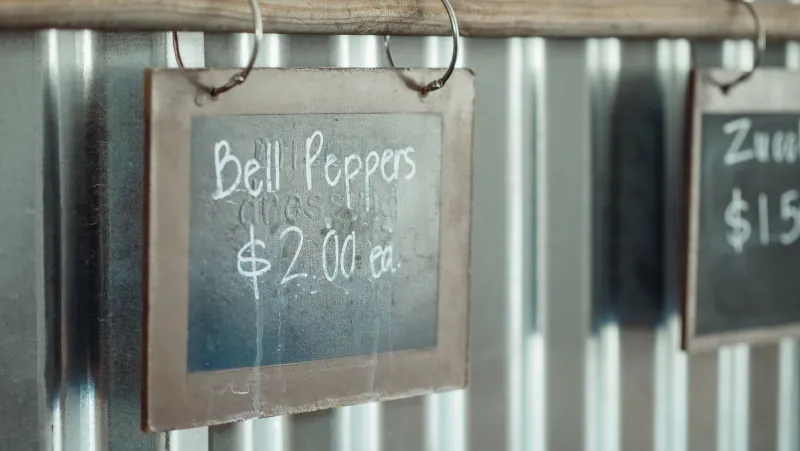
There's a persistent fear among organizers that publishing prices invites complaints. In practice, the opposite happens. Hidden costs are what make people cranky—the wristband that only covers "tasting portions," the vendor that's cash-only, the $9 lemonade discovered after you've already paid to park.
List the range. Say what a sample gets you. Flag the cash-only holdouts. Attendees plan their spend and arrive in a better mood, and vendors stop eating the reputational damage of a surprise.
Three places getting closer to right
The Minnesota State Fair has run a searchable food finder for years—filter by item, by vendor, by dietary need, and it will tell you where on the grounds to find it. It's the closest thing the country has to a working model, and it exists because a state fair understands that people come for the food.
Smorgasburg's vendor pages lean the same direction, pairing each stand with a description of what it actually sells rather than a bare logo. Charleston Wine + Food publishes its events with the chefs and dishes attached, so you know what you're buying before the tickets go on sale. Smaller operations are catching up too: ramen festivals, wing festivals, and county barbecue events increasingly post a menu grid in the final two weeks because their vendors demanded it.
None of these are perfect. All of them beat a wall of logos.
The two-week rule
The case for publishing full menus fourteen days out is simple: that's when people are deciding. Tickets are being bought, babysitters are being booked, carpools are forming. It's also late enough that vendors have their permits settled and their food costs locked, but early enough to fix a mistake.
Earlier than that, menus churn and you're publishing fiction. Later, and you've missed the whole planning window.
A checklist organizers can copy
- One line per vendor, minimum. What they serve, in plain words, not brand poetry.
- Price ranges. Sample cost, full-portion cost, drink cost.
- Dietary tags. Gluten-free, vegan, vegetarian, nut-free, halal, contains shellfish, contains dairy.
- Allergen contact. A named email or phone number people can use before the event.
- Payment methods. Cash, card, or wristband-only, per vendor.
- Map coordinates. Tie each menu entry to a numbered spot on the site map.
- Kid-friendly flags. Portion size, spice level, and whether there's anything besides fries.
- What a tasting ticket covers. Be explicit about portion sizes.
- Water and seating notes. Free water stations, shade, accessible seating.
- A printable version. One PDF, phone-friendly, no login.
- Confirmation date. Stamp the page so people know it's current.
- A change log. If a vendor drops out, say so publicly instead of quietly deleting them.
What organizers get out of it
This isn't charity. Menu pages are among the highest-converting content a food festival can publish, they rank in search for months afterward, they cut down on gate friction, and they let vendors prep the right quantity of product instead of guessing. They also make sponsorship easier to sell, because a menu page is a page people actually read.
So here's the ask, directed at every festival with a countdown timer and a lineup poster: the bands are not the draw. Move the menus up. Two weeks out, no excuses.